Why Exterior Surfaces Need Regular Cleaning
Exterior surfaces are constantly exposed to rain, dirt, traffic, pollution and organic growth. Over time, these conditions can leave paving, walls and paths looking dull or heavily marked. Moss and algae may also develop in shaded or damp areas.
Regular cleaning helps prevent this build-up from becoming increasingly difficult to remove. It can also make it easier to notice cracks, damaged joints and other maintenance problems. Driveways and paths receive additional contamination from vehicles, footwear and garden activity. Commercial properties may experience even heavier use. The frequency of cleaning depends on the location, surface material and amount of exposure.
Some areas may only need occasional attention, while heavily used or shaded surfaces benefit from more regular maintenance. Keeping exterior areas reasonably clean can improve appearance, support general property maintenance and reduce the amount of work required when a deeper pressure washing service is eventually carried out.
Removing Built-Up Dirt and Grime
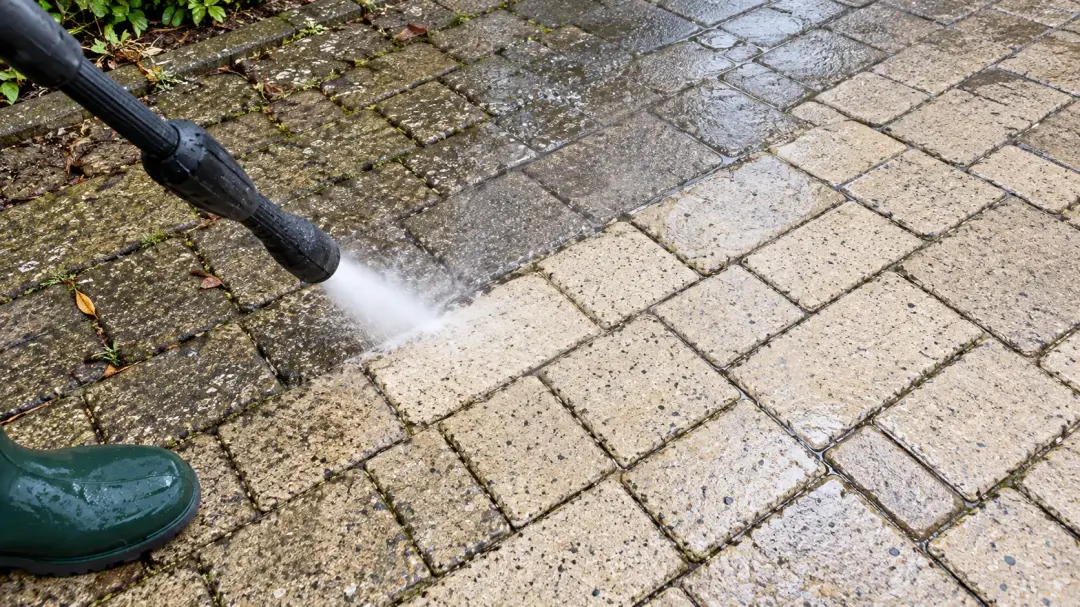
Pressure washing is particularly useful for removing dirt and grime that has accumulated gradually across outdoor surfaces. Driveways, patios and paths can collect soil, dust, traffic residue and other contamination that ordinary rainfall does not remove. Over time, this build-up can change the colour of paving and make surfaces appear older or poorly maintained. Pressurised water helps loosen the dirt from textured surfaces, joints and small recesses where a normal hose may have limited effect. The pressure should still be adjusted according to the material being cleaned. Concrete and many paving materials can usually tolerate a stronger cleaning action than delicate brickwork or timber.
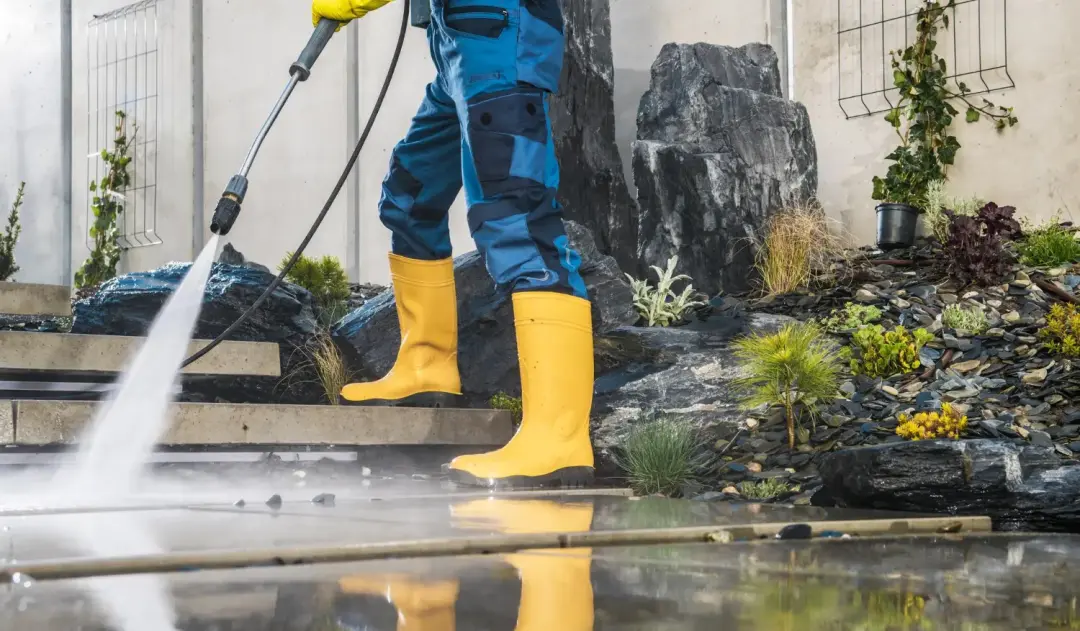
Professional cleaning can also focus on particularly dirty areas before treating the wider surface.
Pre-treatment may sometimes be appropriate for stubborn contamination. The surface should be inspected first to identify loose pointing, damaged paving or existing defects that could be affected by high-pressure water.
Once cleaned, the original colour and texture may become significantly more visible. Pressure washing does not permanently prevent new dirt from accumulating, so ongoing maintenance remains important. However, removing established grime can make future cleaning easier and provide a much cleaner foundation for sealing, repairs or other exterior maintenance.
Removing Moss and Algae
Moss and algae commonly develop on exterior surfaces that remain damp or receive limited sunlight. Patios, paths, walls and shaded paving can all be affected. Pressure washing can remove visible growth and the dirt surrounding it. The correct pressure is important because forcing water too aggressively into joints or porous materials can cause damage.
Some surfaces may also benefit from an appropriate cleaning treatment before or after washing. Moss should not simply be allowed to build up indefinitely. Thick growth can retain moisture and make outdoor areas appear neglected. Algae can also create slippery patches, particularly on paths and patios.
Cleaning removes the visible contamination, although the underlying conditions may allow it to return. Improving drainage, reducing persistent shade where possible and carrying out periodic maintenance can slow regrowth. Professional pressure washing provides an efficient way to clear affected surfaces while allowing the operator to adjust the cleaning method according to the material and condition of the area.
Cleaning Stains from Outdoor Surfaces
Outdoor surfaces can develop many different stains, including marks from soil, leaves, vehicles, garden furniture and everyday use. Pressure washing can remove or reduce many of these marks, although results depend on the type of stain and how deeply it has penetrated. Fresh surface contamination is generally easier to remove than staining that has remained for years. Oil and other substances can soak into porous paving, making complete removal more difficult. Pre-treatment with an appropriate cleaning product may help before pressure washing begins. The surface material should always be considered.
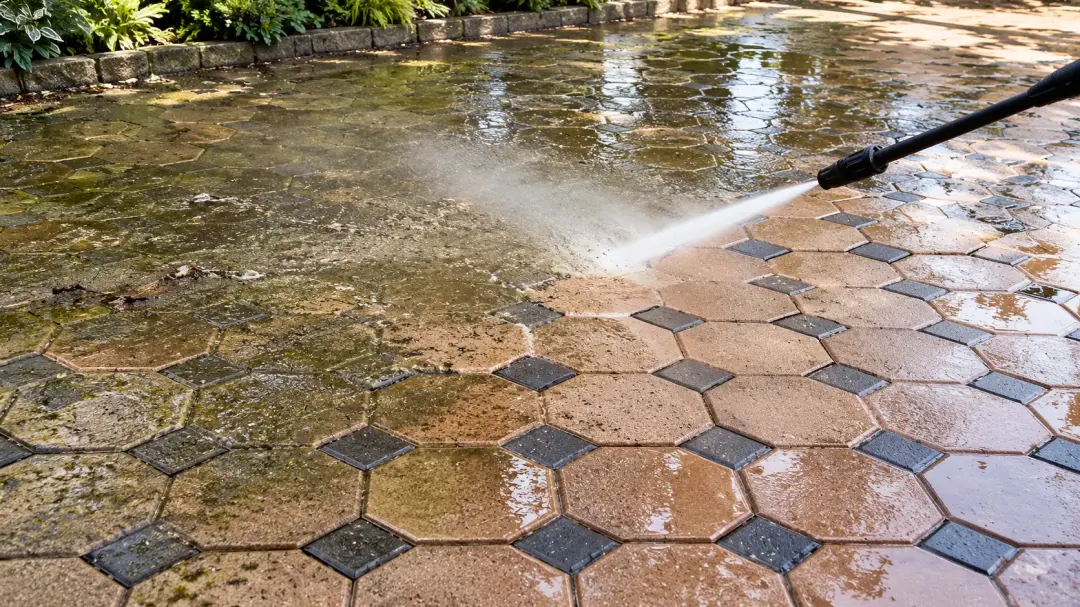
A cleaning method suitable for concrete may not be appropriate for natural stone, painted surfaces or delicate brickwork. Professional operators can test an inconspicuous section first when necessary.
Pressure washing can also expose colour differences that were hidden beneath general grime. This sometimes makes older permanent stains more noticeable once the surrounding area is clean. Expectations should therefore remain realistic.
The aim is to remove surface contamination as effectively as possible without damaging the material underneath. Following cleaning, suitable sealing may reduce future staining on some surfaces. Regular maintenance and prompt attention to spills can also make stubborn marks less likely to develop. Pressure washing provides a useful first step for restoring heavily marked exterior areas.
Improving the Appearance of Your Property
Pressure washing can significantly improve the appearance of outdoor areas by removing layers of dirt, algae and weather-related build-up. Driveways, patios and paths often look noticeably brighter after cleaning. The improvement can make the wider property feel better maintained without replacing existing surfaces.
Walls and certain exterior features may also benefit where suitable cleaning methods are used. Attention should be given to entrances and other highly visible areas. A cleaner driveway or front path can make a stronger first impression. Commercial premises can benefit for the same reason. Pressure washing does not repair cracked paving, damaged pointing or other structural problems. However, cleaning can make those issues easier to see and assess.
The best results come from combining regular exterior cleaning with sensible maintenance. A professional service can identify which areas are suitable for pressure washing and adjust the equipment accordingly, helping restore appearance without using unnecessarily aggressive cleaning techniques.
Restoring Driveways and Patios
Driveways and patios are among the most common surfaces cleaned using pressure washing because they collect substantial dirt from vehicles, footwear, weather and garden activity. Moss and algae may also develop between paving or across shaded sections. A thorough clean can reveal much more of the original colour and texture of the surface. This can make an older driveway or patio look considerably fresher without replacing the paving. Different materials require different techniques. Concrete, block paving, natural stone and other surfaces can respond differently to pressurised water. Joints also need attention because excessive pressure can remove sand or loose pointing.
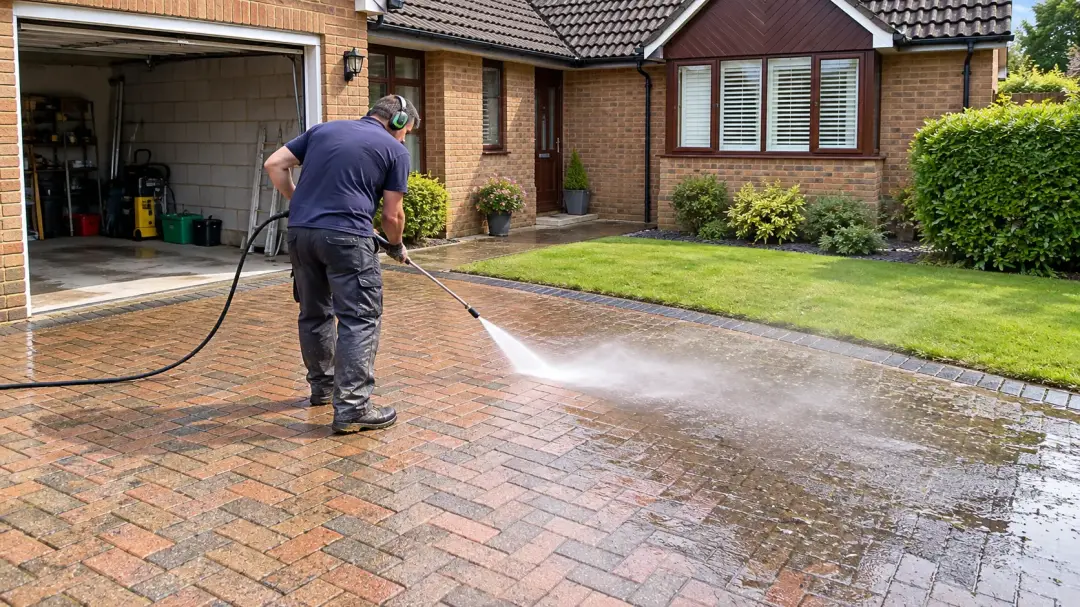
Block paving may require jointing sand to be replaced after cleaning. Damaged or unstable sections should ideally be identified before the work starts. Oil marks, rust staining and other deeper contamination may need specialist treatment in addition to pressure washing.
The surrounding area should also be protected from displaced dirt and spray. After cleaning, some surfaces can be sealed where appropriate. This may help protect appearance and simplify future maintenance.
Pressure washing cannot restore damaged paving structurally, but it can remove years of surface build-up and provide a much cleaner starting point for repairs, sealing or continued use of the existing driveway or patio.
Pressure Washing for Paths and Walkways
Paths and walkways can become dirty quickly because they receive regular foot traffic and remain exposed to changing weather. Moss and algae are particularly common in shaded areas. Pressure washing can remove this build-up and restore a cleaner walking surface. Careful cleaning is important around paving joints and older materials. Too much pressure can dislodge loose mortar or damage softer surfaces.
The surrounding garden should also be considered. Spray can move dirt onto walls, plants or nearby surfaces if the work is not controlled. Professional equipment allows the pressure and nozzle to be adjusted according to the area. Edges, corners and steps may need additional attention.
Regular cleaning can help keep entrances, garden paths and commercial walkways looking presentable. It can also make surface defects easier to notice. Once cleaned, ongoing sweeping and occasional maintenance can slow the return of dirt and organic growth between deeper pressure washing visits.
Cleaning Walls and Brickwork
Pressure washing can be used on some exterior walls and brickwork, but these surfaces need careful assessment before cleaning begins. Older brick, damaged mortar and painted finishes can be vulnerable to excessive pressure. The goal should be to remove surface contamination without eroding mortar joints or damaging the face of the brick. Lower pressure, greater working distance or alternative cleaning methods may be needed. Dirt, algae and atmospheric staining can accumulate gradually on walls, particularly in damp or shaded locations. Cleaning may restore a more even appearance. However, some discolouration can be permanent or related to the material itself rather than surface dirt.
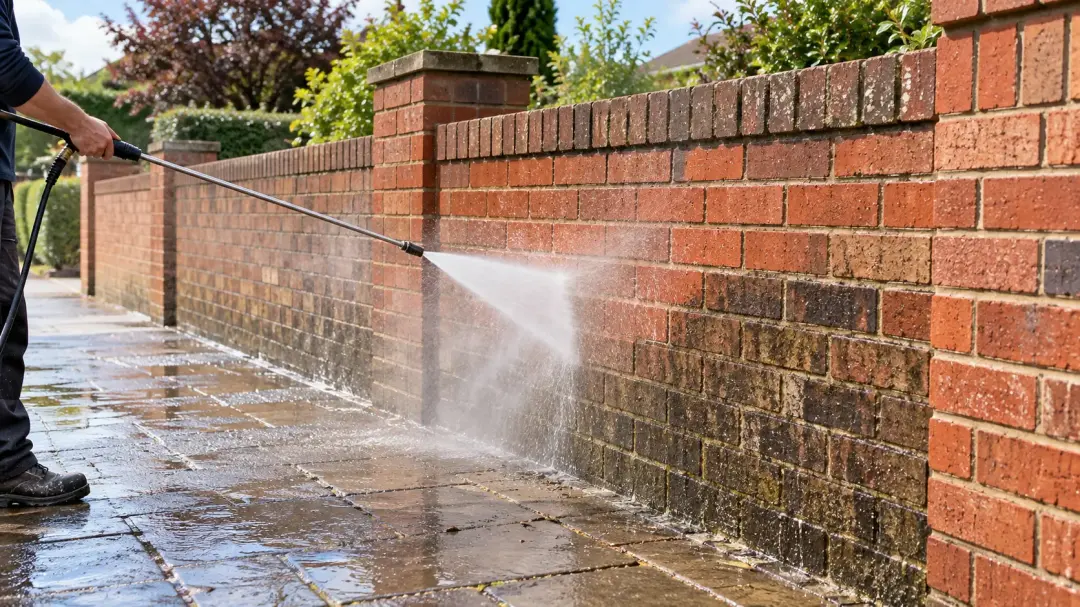
Cracks and failing pointing should be identified before pressure washing because water can be forced into damaged areas. Openings, vents and nearby electrical fittings also need appropriate protection. Professional cleaners should assess the wall condition and select a method that suits the construction.
In some cases, soft washing or another lower-pressure approach may be preferable. Pressure washing is therefore not automatically the correct solution for every wall.
When used carefully on suitable surfaces, it can remove substantial exterior grime and improve appearance. The cleaning method should always be chosen according to the brick, mortar and overall condition of the property rather than relying on maximum pressure.
Pressure Washing for Decking and Fencing
Pressure washing can clean some timber decking and fencing, but wood requires a gentler approach than hard paving. Excessive pressure can raise the grain, splinter the surface or leave visible marks. Older or weathered timber may be particularly vulnerable. The operator should therefore use suitable pressure, nozzle selection and working distance.
Cleaning can remove surface dirt, algae and weathered residue before further maintenance. Timber should then be allowed to dry thoroughly before stains, oils or paints are applied. Loose boards and damaged sections should be repaired beforehand. Not every wooden surface needs pressure washing.
Manual cleaning or lower-pressure methods may sometimes provide a safer result. Professional assessment can help determine the best approach. Where pressure washing is suitable, controlled cleaning can refresh decking and fencing while preparing the timber for protective treatment and improving the overall appearance of outdoor areas.
Removing Slippery Surface Build-Up
Outdoor surfaces can become slippery when algae, moss and organic debris accumulate, particularly in damp or shaded locations. Patios, paths, steps and commercial walkways can all develop this problem. Pressure washing can remove much of the visible build-up from suitable surfaces. This may improve grip by exposing the original texture of paving or concrete. Cleaning should focus carefully on areas where water regularly collects. However, pressure washing alone does not guarantee that a surface will remain slip-free. Algae can return if damp conditions continue. Drainage problems may therefore need separate attention.
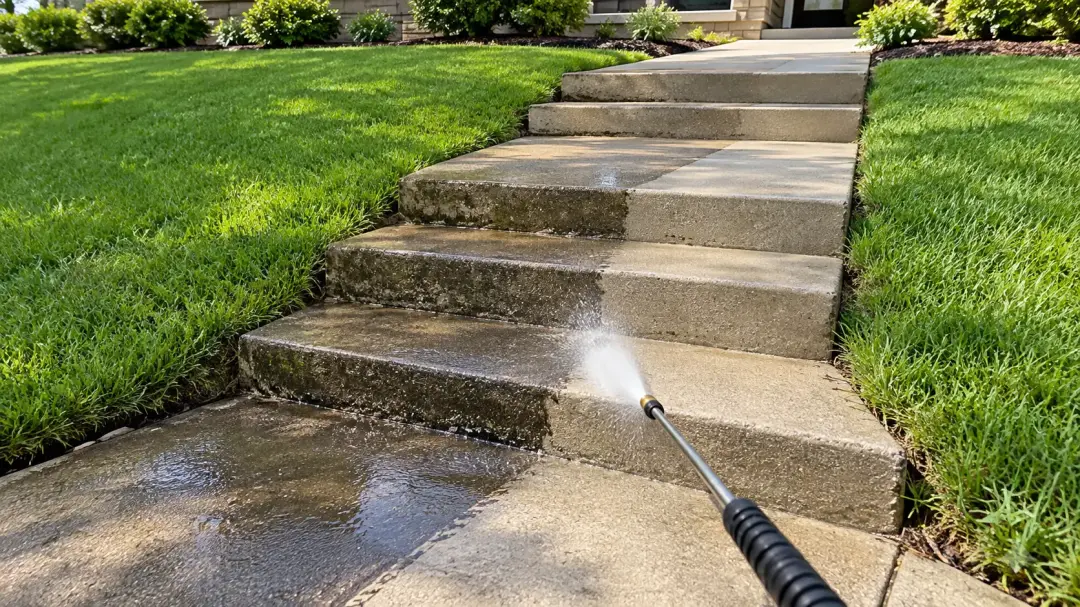
The cleaning method should also avoid damaging textured or non-slip finishes. Using excessive pressure could alter the surface or create other maintenance problems.
After washing, the area should be rinsed and allowed to dry. Any loose debris should be removed. Commercial sites may benefit from more frequent inspection where entrances and walkways experience continuous use.
Regular cleaning can form part of a broader maintenance plan for outdoor circulation areas. Property owners should also address leaking gutters, poor drainage and persistent shade where these contribute to repeated growth. Professional pressure washing can remove established slippery contamination efficiently while helping owners identify areas where further preventative maintenance may be beneficial.
Helping Outdoor Areas Stay Safer
Pressure washing can help outdoor areas stay safer by removing dirt, moss and algae that may create slippery patches. Paths, patios, steps and entrances can all benefit from this type of maintenance.
A clean surface also makes cracks, uneven paving and damaged joints easier to see. These physical defects may require separate repairs. Pressure washing should therefore be treated as one part of exterior maintenance rather than a complete safety solution. The correct cleaning pressure is important. Damaging paving or loosening joints can create new hazards. Professional operators can adjust their equipment according to the surface.
Commercial properties may need particular attention around frequently used entrances and walkways. Residential properties can benefit around garden paths and patios. Regular inspection after cleaning helps identify whether water pooling or drainage issues are contributing to repeated algae growth. Keeping outdoor areas clean, repaired and reasonably free from organic build-up can support safer everyday use.
Preparing Surfaces for Painting
Pressure washing can be useful when preparing suitable exterior surfaces for painting because it removes dirt, loose contamination and weather-related residue that could interfere with adhesion. A clean surface gives new coatings a better foundation. The method must still suit the material. Exterior walls, concrete and some timber surfaces may require different pressure levels. Loose existing paint should be assessed carefully. Pressure washing may remove some poorly attached material, but scraping or sanding can still be necessary. The surface also needs enough time to dry after cleaning.
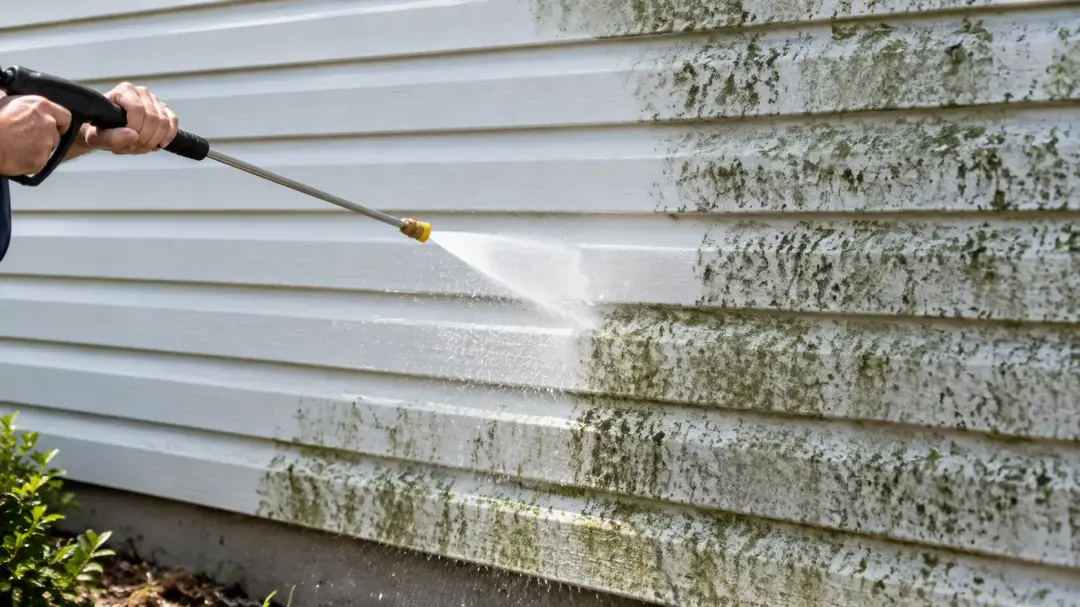
Painting damp walls or timber can lead to poor results. Any cracks, rot or damaged mortar should be repaired before the final coating is applied. Cleaning alone cannot correct structural defects.
Professional painters may also specify particular cleaning products or preparation methods depending on the paint system. Pressure washing should therefore be coordinated with the later decorating work rather than treated as a separate task.
Nearby windows, vents and electrical fittings need protection during cleaning. The operator should avoid forcing water into vulnerable areas. Once the surface is clean, sound and fully dry, primers and finishing coats can be applied according to the manufacturer's instructions. Careful pressure washing can reduce manual preparation and help create a cleaner base for exterior painting when it is appropriate for the material.
Preparing Surfaces for Sealing
Some driveways, patios and other exterior surfaces can be sealed after cleaning. Pressure washing helps remove dirt and contamination before the sealant is applied. A clean surface can improve adhesion and appearance. The area must normally be allowed to dry thoroughly. Applying sealant while moisture remains trapped in the surface can cause problems.
Any required repairs or replacement jointing material should also be dealt with first. Block paving, for example, may lose jointing sand during pressure washing and need it replaced. Not every surface requires sealing, and the product should be compatible with the paving or stone. Previous sealants can also affect preparation.
A professional cleaner or paving specialist can advise whether sealing is appropriate. Where it is suitable, pressure washing provides a practical way to prepare the surface by removing contaminants that could otherwise become trapped beneath the protective finish.
Pressure Washing Before Property Maintenance
Pressure washing can be useful before several types of exterior property maintenance because cleaning exposes the true condition of the surface underneath. Dirt and organic growth can hide cracks, failing mortar and other defects. Driveways and patios may need repairs after loose material becomes visible. Walls can reveal areas of damaged pointing once surface contamination has been removed. Timber may show splits or deterioration that were less noticeable before cleaning. This makes pressure washing a useful preparation stage before maintenance planning.
The cleaning method should still be chosen according to the material. Aggressive pressure can worsen existing weaknesses rather than simply reveal them. Any obviously unstable areas should be identified before washing begins.
Maintenance contractors may also need the surface to dry before carrying out repairs, painting or sealing. Timing should therefore be coordinated. Pressure washing can also make measurements and visual inspections easier because heavy dirt no longer obscures joints or edges. Commercial property managers may use cleaning as part of planned maintenance inspections.
Homeowners can take a similar approach before carrying out seasonal repairs. Cleaning should not be used to disguise deterioration. Instead, it provides a clearer view of what needs attention. Used as part of a wider maintenance programme, pressure washing can prepare suitable surfaces and help property owners make more informed decisions about repairs and protective treatments.
Cleaning Hard-to-Reach Exterior Areas
Some exterior areas are difficult to clean manually because they are positioned behind features, along narrow paths or across larger paved spaces. Pressure washing equipment can extend cleaning reach in many of these locations. Long hoses and suitable attachments can reduce the need to move heavy equipment constantly.
However, access still needs to be safe. Operators should not use pressure washing equipment from unstable ladders or unsuitable positions. Upper walls and other elevated areas may require specialist access equipment or alternative cleaning methods. The surrounding environment also matters.
Confined spaces can increase spray and make runoff harder to control. Professional cleaners can plan the work around access restrictions and choose equipment suitable for the location.
Not every difficult area should automatically be pressure washed. If the operator cannot control the spray or inspect the surface properly, another method may be safer. Good access planning helps exterior cleaning reach more areas without creating unnecessary risks or accidental property damage.
Why Professional Equipment Can Give Better Results
Professional pressure washing equipment can provide more consistent cleaning because it offers greater control over water pressure, flow and attachments than many basic domestic machines. This allows the operator to adapt the cleaning method to different exterior surfaces. Commercial-grade equipment can cover large driveways, patios and business premises more efficiently. Surface cleaners and specialised nozzles can help produce a more even finish across broad areas. Higher capability does not mean maximum pressure should always be used.
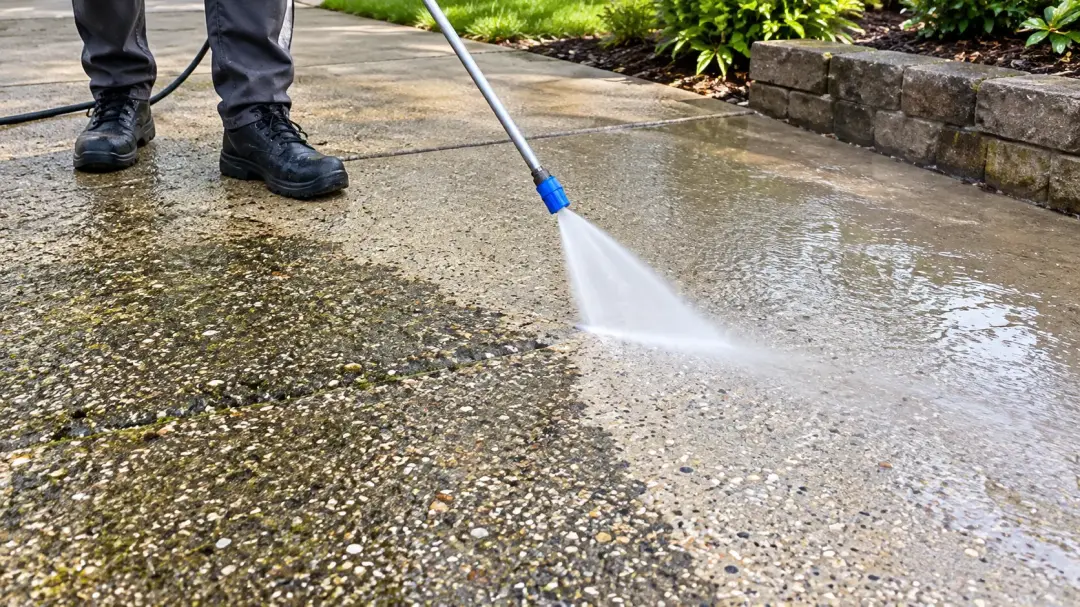
The main advantage is control. An experienced operator can reduce pressure on sensitive materials and increase cleaning power where a more durable surface allows it. Professional equipment may also be combined with suitable detergents or pre-treatments for particular types of contamination.
Water management and hose length can make larger sites easier to clean without repeatedly moving equipment. The quality of results still depends on the person operating the machine. Incorrect technique can create stripes, damage joints or mark softer materials even with expensive equipment.
A professional service should therefore combine appropriate machinery with knowledge of different surfaces. The operator can inspect paving, brickwork or timber before deciding on settings. Using well-maintained equipment and suitable techniques can make exterior cleaning quicker, more consistent and less likely to cause avoidable damage.
Choosing the Right Pressure for Each Surface
Different exterior materials require different pressure levels. Concrete and some hard paving can tolerate stronger cleaning than timber, aged brick or delicate stone.
Using excessive pressure can damage surfaces. It may remove mortar, scar wood or disturb jointing material. The operator should therefore assess the area before starting. Testing a small section can be useful when the material or previous treatment is uncertain.
Nozzle choice and working distance also influence cleaning force. Pressure can often be reduced while still achieving effective results through better technique. Stubborn dirt should not automatically be attacked with maximum power. Suitable pre-treatment may provide a safer option. Professional operators understand that effective pressure washing involves matching the equipment to the surface rather than using one setting everywhere. Choosing carefully helps remove dirt while preserving the condition and appearance of the material being cleaned.
Avoiding Damage to Paving and Brickwork
Pressure washing can damage paving and brickwork when excessive force or poor technique is used. The risk is greater where surfaces are already weathered, cracked or poorly jointed. Mortar joints can be eroded by strong concentrated water. Block paving may lose jointing sand. Certain natural stones can also develop marks if cleaned too aggressively. The surface should therefore be inspected before work begins. Loose pointing or unstable blocks may need repair first. The operator should select a suitable nozzle and maintain an appropriate distance from the surface.
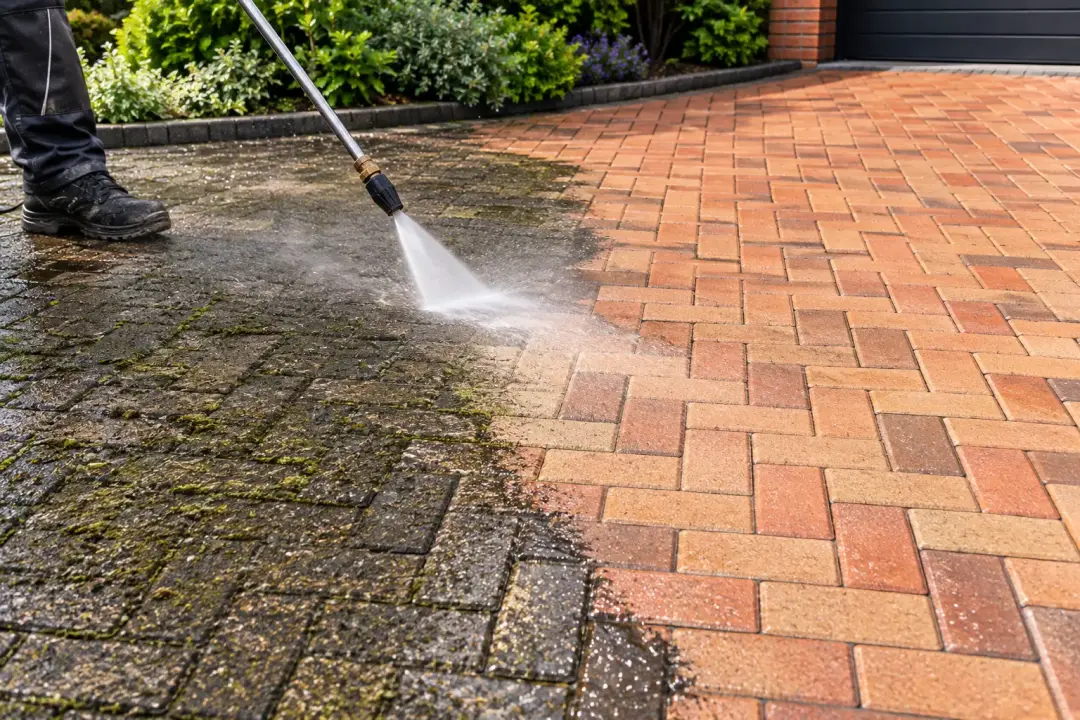
Holding a narrow jet too close can create visible lines or uneven patches. Pressure should be reduced around vulnerable edges and joints. Testing a small area can help establish an appropriate approach. Drainage should also be considered because high volumes of water can move loosened dirt into gullies or neighbouring areas.
After cleaning block paving, jointing sand may need replacing once the surface has dried. Brick walls require additional caution because water can enter damaged mortar or openings. Older brick faces may also be softer than they appear.
Professional pressure washing focuses on achieving a clean result without sacrificing the integrity of the surface. Using controlled settings and suitable techniques helps minimise the risk of damage while still removing substantial exterior contamination.
Our pressure washing team cleans driveways, patios, walls, roofs and more for homes and businesses. We also handle car parks, garages, building exteriors, render and graffiti. Every job is planned around your property, using safe methods and suitable equipment to remove dirt, moss and stains while protecting surfaces.